
Despite occasional bursts of spunky comedy, the madness simply doesn't land as expected, and the overall vibe feels off with Vibe.

'It is unfortunate that the Chairman of Tata Sons, a Company renowned for setting high standards of corporate governance, is contending reappointment on such an untenable interpretation of the Articles'.

The benchmark Sensex plummeted 813 points to a three-month low, with the Nifty settling below 23,450, as escalating tensions in West Asia drove crude oil prices above USD 100 per barrel, leading to widespread selling in IT, FMCG, financial services, and oil & gas shares.

Vaibhav Sooryavanshi gave Tilak Varma a taste of his sledging medicine, sparking a heated exchange that caught the attention of umpires and fans alike.
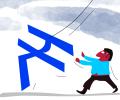
The Indian rupee experienced its sharpest single-day decline in eight weeks, settling at 94.83 per dollar, primarily due to escalating crude oil prices and persistent risk-off sentiment driven by heightened geopolitical tensions and limited foreign inflows.

Mention Anant Nag to almost anyone in Karnataka and the reaction is immediate: 'Anant? Oh my God! What a fascinating man!' 'Such an intellectual. Such a great speaker. Brilliant actor.'

Indian benchmark indices, Sensex and Nifty, ended marginally lower after recovering from sharp intraday losses, driven by cooling crude oil prices and buying interest in HDFC Bank and IT sector stocks.

Indian benchmark indices Sensex and Nifty experienced declines in early trade, influenced by the escalating US-Iran standoff and persistently high crude oil prices, with experts predicting increased volatility.

TMC MP Mahua Moitra was allegedly pelted with eggs by BJP workers during a visit to Nadia district's Tehatta area, despite police presence. Moitra invoked a recent Supreme Court observation regarding her apprehension of such attacks, questioning police inaction and alleging contempt of court. The BJP has condemned the act but denied involvement.

External Affairs Minister S Jaishankar stated that India is in continuous dialogue with both Ukraine and Russia, seeking ideas and suggestions to mitigate or cease the ongoing conflict. Following his visit to Kyiv, Jaishankar reiterated India's stance that the war must end through dialogue and diplomacy, emphasising that trade decisions like oil purchases are not the solution to the conflict.

'Wages have not risen. Rural wages have stagnated. The growth was 0.7 per cent last year. For casual and irregular labour, the wage growth is negative.'

India's exports increased by 15.5 per cent to USD 40.41 billion in June, but the trade deficit significantly widened to a record USD 30.43 billion due to a 31 per cent surge in imports.

Prime Minister Narendra Modi met Iranian President Masoud Pezeshkian at the SCO summit, advocating for dialogue and diplomacy to resolve the West Asia conflict and expressing India's desire to expand and diversify trade with Iran. Pezeshkian, in turn, urged India to leverage its contacts to promote peace.

Indian benchmark equity indices, Sensex and Nifty, opened higher on Monday, driven by strong buying in blue-chip stocks like HDFC Bank and Infosys, despite persistent geopolitical tensions and elevated crude oil prices.

The SIP culture has been rapidly growing in India among retail investors. As per AMFI data, monthly SIP contributions crossed 31,961 crore in July 2026, which is nearly a 10x jump from 3,122 crore recorded in April 2016.
The SIP culture has been rapidly growing in India among retail investors. As per AMFI data, monthly SIP contributions crossed 31,961 crore in July 2026, which is nearly a 10x jump from 3,122 crore recorded in April 2016.

India successfully facilitated a significant diplomatic meeting between Iranian President Masoud Pezeshkian and UAE Crown Prince Sheikh Khaled bin Mohamed bin Zayed Al Nahyan on the sidelines of the BRICS Summit in New Delhi. This interaction, a diplomatic breakthrough given ongoing West Asia conflicts, occurred as BRICS adopted a declaration urging restraint and protection of civilians in the region, highlighting the bloc's commitment to peace and stability.

Analysts predict that developments in the West Asia conflict, crude oil prices, and upcoming US inflation data will be the primary factors influencing the Indian stock market next week, alongside foreign investor activity and global market trends.

The Indian government has introduced a 0.4% fee on UPI transactions above Rs 2,000 for merchants, effective October 15, sparking strong opposition from political parties and traders. Despite accusations of foreign influence and demands for a rollback, the finance ministry and top functionaries have stated there will be no reversal, citing the need for a self-sustaining digital payments ecosystem.

Commodity trading on MCX is quite different from trading equities on the NSE or BSE. During the June-July period, the commodity market players in India will encounter several commodity contract expiries.

Indian benchmark indices, Sensex and Nifty, closed higher on Thursday, breaking a three-day losing streak, driven by late buying in financial heavyweights like HDFC Bank and Axis Bank, despite persistent geopolitical tensions and crude oil prices exceeding USD 100 per barrel.

Opposition parties, including Congress, TMC, and RJD, have strongly criticised the government's decision to impose a 0.4% Merchant Discount Rate (MDR) on UPI transactions exceeding Rs 2,000 made to merchants. They allege the move is a result of "American imperialism" and will lead to increased commodity prices, while the government maintains the charge is on merchants and not consumers, with person-to-person transactions remaining free.

The challenge for India lies in navigating complex landscape to its best advantage. The BRICS Summit will test its navigation skills, asserts former foreign secretary Shyam Saran.

MS Dhoni's reported bid for a stake in Chennai Super Kings has been denied by the franchise, which said the former captain never approached them about buying a share in the IPL team.

The opposition has intensified its criticism of the government's decision to impose a 0.4 per cent Merchant Discount Rate (MDR) on UPI transactions above Rs 2,000, effective October 15. Leaders like Rahul Gandhi and Jairam Ramesh allege the move is a result of US pressure, particularly from American card companies, and demand an immediate rollback, warning of increased costs for consumers.

Russian President Vladimir Putin is set to visit India for a three-day trip to attend the 18th BRICS Summit and engage in bilateral discussions with Prime Minister Narendra Modi. The summit will focus on strengthening strategic partnerships and addressing international issues, with Putin also scheduled to meet other world leaders.
The opposition has strongly criticised the government's decision to introduce a 0.4% Merchant Discount Rate (MDR) on UPI transactions above Rs 2,000 for merchants, effective October 15. They allege the move is a result of US pressure and will lead to increased commodity prices, calling it a "betrayal" of the common man. The government, however, clarifies that customers will not be charged, and the MDR applies only to merchants for larger transactions.

The Indian government has introduced a 0.4% transaction fee on UPI payments above Rs 2,000 for merchants, effective October 15, sparking a political row. The Congress party has labelled it a "Modi tax" and accused the government of succumbing to US pressure, while the BJP has defended the move, clarifying that consumers will not be charged and small vendors are protected. The finance ministry reiterated that the charge is on merchants, not customers.

The Congress party has accused the Indian government of imposing new charges on UPI transactions due to pressure from the United States, specifically to benefit American card companies. The opposition party demanded the withdrawal of the decision, calling it "anti-national" and alleging it fills the coffers of US firms while burdening Indian citizens. The government, however, clarified that the Merchant Discount Rate (MDR) charges apply only to commercial transactions above Rs 2,000 and are not levied on consumers, a stance supported by the BJP which accused Congress of spreading "fake news".

Analysts predict that the Indian stock market's sentiment this week will be primarily influenced by the domestic GDP data announcement, crude oil prices, and the crucial US non-farm payrolls report.

Indian benchmark indices Sensex and Nifty opened higher, driven by a significant drop in crude oil prices and a positive trend in global equities, with foreign fund inflows further bolstering domestic markets.

Urban Indian millennials are caught in an algorithmically amplified consumption spiral where social media normalises spending patterns that systematically undermine retirement security.

The Securities and Exchange Board of India (Sebi) is set to expand its artificial intelligence (AI)-based surveillance beyond trading data to include corporate filings, aiming to proactively flag financial misstatements and manipulation in quarterly results without relying solely on investor complaints.

Gold prices in India extended their losing streak, falling by Rs 1,500 to Rs 1,60,900 per 10 grams, influenced by hawkish remarks from Federal Reserve Chair Kevin Warsh and rising oil prices, which have increased expectations of an interest rate hike.

India has removed a key regulatory hurdle, allowing exporters to receive payments in Indian currency while retaining incentives under the country's foreign trade policy, a move aimed at promoting wider use of the rupee in international trade.

Dabur India reported a steady performance in Q1 FY27 with 10.6 per cent year-on-year revenue growth, a 12-quarter high, driven by broad-based gains across India and international businesses. However, volume growth, particularly in beverages due to unseasonal rains, and concerns over monsoon impact on rural demand remain key challenges.
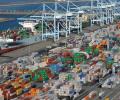
India's latest trade data reveals a significant geographical realignment, with trade surpluses growing decisively with Asian and African nations, even as surpluses with traditional partners like the US and Netherlands narrow.
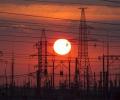
India's power sector is undergoing a significant transformation, driven by a planned shift towards renewable energy and ambitious capacity expansion targets, with major players like NTPC, JSW Energy, Adani, and Tata Power prioritising predictable returns. However, execution challenges and valuation concerns remain critical factors for sustained growth.

The Congress party has criticised the government's new 0.4% charge on UPI transactions above Rs 2,000 for merchants, terming it a "Modi tax". Opposition leaders, including Rahul Gandhi and Mallikarjun Kharge, allege that this move will ultimately burden consumers through price hikes and accuse the government of succumbing to American pressure to dilute India's zero-MDR policy. The government states the charge will support banks and fintechs.

Russia on Monday assured India of uninterrupted supply of energy and fertilisers amid disruption caused by the West Asia crisis, as External Affairs Minister S Jaishankar met President Vladimir Putin in Moscow and held talks with his key interlocutors.
